Weekly · grown-ups · soft shoes only
Irish Dancing Classes in Sheffield
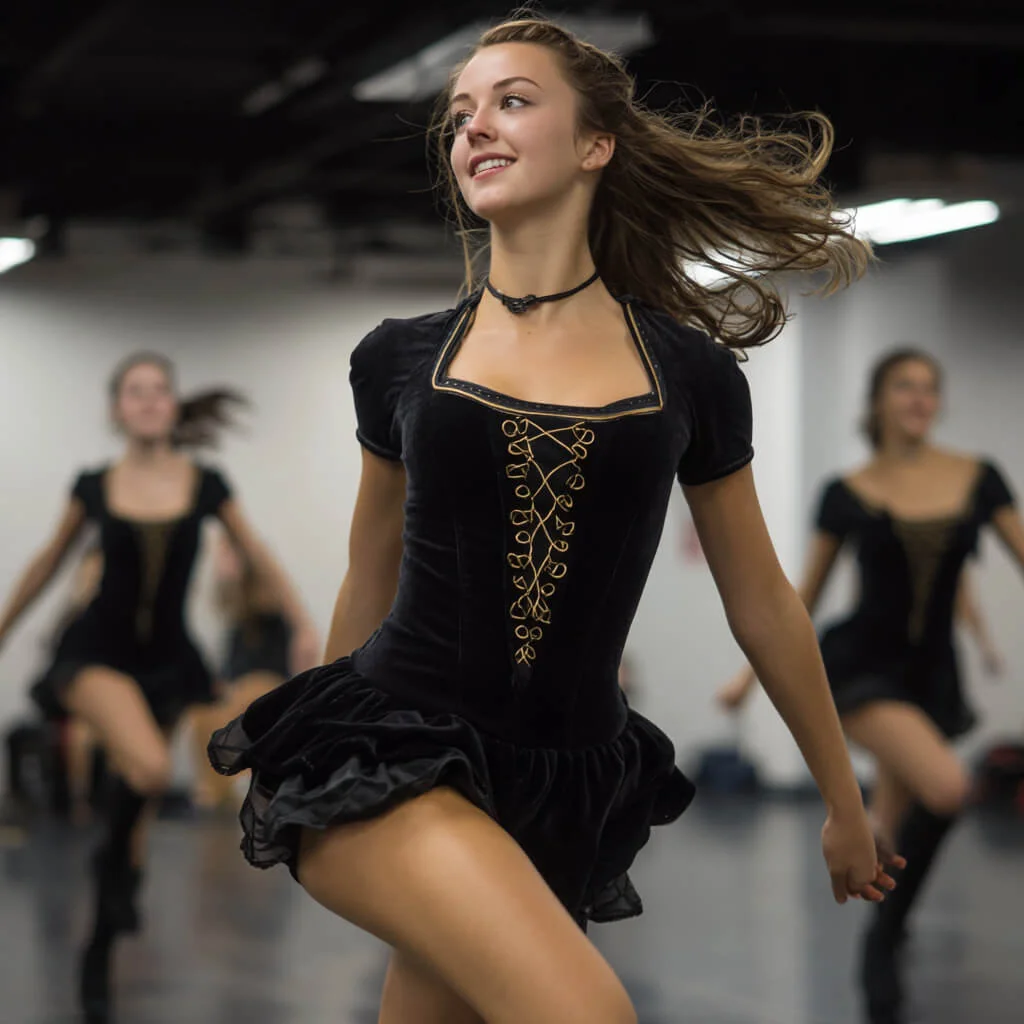
The Irish dance classes in Sheffield most adults imagine involve a wig, a stage and a childhood spent competing. Ours involve none of those. Sixty minutes a week in a central studio learning jigs and reels in ordinary soft shoes, with the rhythm taught before the height and the arms left entirely alone. Single class £10, or £32 buys you the month.
Come and try a reel
Ask about the evening and it's yours by return.
Irish dancing has its own weekly slot in the middle of Sheffield. Drop us your details and the night, the level and the studio address come back in one email — no diary on this page to go out of date. Tell us if you danced as a child; it comes back faster than you'd think.
- £10 a class · £32 for a block of four
- Soft shoes or plain trainers — no hard shoes required
- Answered by someone who teaches, not a booking system
The essentials
- Where Sheffield city centre studio
- When Weekly, evening — sent by reply
- Length One hour
- Level Beginners up, returners welcome
- Ages 17 – 75
- Partner Not required at any point
The class
Jigs and reels, minus the childhood.
What adult Irish dancing actually involves
Irish dance is percussive before it is anything else: the feet are keeping time with the fiddle, and the stillness above the waist exists so you can hear them do it. That makes it unusually satisfying to learn late, because the first thing you get good at is listening. We teach in soft shoes, so the sound is light and the knees stay happy, and the hop-two-three that underpins nearly everything is drilled until it is automatic rather than counted.
After that the steps multiply rather than get harder. Threes and sevens, the side step that travels, a light rock and eventually a short reel you can dance right through. Nobody is measured against a syllabus, there are no grades to sit and no costume to save up for. Adults who danced as children arrive expecting to have lost it and usually find the pattern is still in their legs; total newcomers find the counting familiar from every wedding band they've ever heard. Both end up in the same line, and the wider Sheffield timetable works the same generous way.
How the sixty minutes break down
A gentle warm-up for calves and ankles, then technique on the spot — points, hops, the position of the standing leg. The middle stretch travels across the floor in small groups so you get room and a run-up. The last quarter is set to music and danced through as a group, which is when the room finally sounds like a session. If percussive footwork turns out to be your thing, tap scratches a similar itch on a different surface, and hen groups after something livelier than the pub can book an Irish dancing hen party for the weekend itself.
A block, week by week
One month from first hop to first reel.
The usual shape of four weeks. It stretches when a room wants more time on the travelling step, and most rooms do.
Up on the toes
Posture, the standing leg and the hop-two-three. Slower than it looks on stage, and far more about balance than speed.
Threes and sevens
The travelling side step that gets you across a floor, plus how to change direction without losing the count.
Rhythm you can hear
Cutting the beat finer — the small syncopations that separate someone doing the steps from someone dancing them.
A reel, end to end
The month's material joined into one short reel, danced through to a proper tune, with everybody on the same beat.
Side effects
What Irish dancing quietly gives you.
Ankles first. Everything else follows them.
- Calves and ankles stronger than any gym machine manages
- Balance that shows up on icy Sheffield pavements in January
- An ear for a jig against a reel, which you'll never lose
- Posture held from the middle rather than the shoulders
- Serious cardio disguised as a bit of a laugh
- Something to do when the band strikes up at a wedding
- Concentration, because you cannot think about work and count sevens
- A line of people who notice when you miss a week
Irish dancing, answered
The things adults ask before booking.
Ten straight answers about Irish dance classes in Sheffield, from people who take the class.
1Do I need hard shoes for Irish dancing?
Not for this class. Everything is taught in soft shoes or light trainers, which keeps the sound gentle and the joints comfortable. We don't supply, hire or sell footwear of any sort, so wear what you already own and only buy Irish pumps if you get properly hooked.
2Is Irish dancing only worth starting as a child?
That myth keeps a lot of good dancers out of the room. Adults learn the rhythm faster than children do because they can hear the music properly; what takes longer is the ankle strength, and four weeks makes a visible dent in that. Our oldest regulars started well past fifty.
3Will I be entered into competitions?
Never. This is a weekly class for the pleasure of dancing, not a feis pathway — no grades, no adjudicators, no medals. If competing is what you're after, we'll happily point you towards a registered competitive school instead.
4Do the arms really stay down?
In the solo material, yes — hands rest by the sides so the legs carry the whole story, and it feels strange for about ten minutes before it feels natural. Group and ceili-style figures are different, and there you'll be linking arms and turning with the people beside you.
5I danced as a kid and stopped. Can I come back?
Returners are a good third of the class. Muscle memory for the basic steps is astonishingly durable, so expect the first fifteen minutes to feel like meeting an old acquaintance. The teacher will give you harder variations while beginners work the plain version.
6Is it hard on the knees?
Less than you'd expect in soft shoes, because the landings are small and controlled rather than heavy. We warm the ankles and calves thoroughly and keep the jumping low in early weeks. Mention any injury when you arrive and the teacher will give you an alternative.
7Which part of the city is the Irish class in?
Centrally, within a short walk of the station and the tram, with evening parking nearby. We send the exact building with your timetable rather than printing it here, since the room sometimes moves when the week fills up.
8What music do you dance to?
Traditional jigs, reels and hornpipes, mostly recorded, with the tempo pulled back while a step is new and lifted once it's settled. Newer folk arrangements creep in too — the rhythm matters more to us than the vintage of the recording.
9How much is an Irish dancing class?
A single session is £10, paid on the door. Four consecutive weeks booked together cost £32, which works out at £8 each. Nothing is signed, nothing renews and you owe us nothing if life gets in the way.
10Can I just come once and see?
Yes — one class, ten pounds, no obligation attached to it. Dance the hour, decide afterwards, and pick up a block whenever you feel like it. Nobody will chase you if you don't come back.